Plan A · Repair
The plan to end aging.
How to address aging as a root cause:
01 Why aging is the target
In Humans, aging increases your risk of death.
Chance of Death By Age
Chance of death per year. Source: @statto, as shown in the deck. Hover a point or pick an age.
But in some species, aging doesn't mean a greater chance of disease or death.
We can get older healthfully.
Human vs. mole rat.
The naked mole rat’s chance of dying barely changes with age. Ours climbs after 65. Negligible senescence, as charted in the deck.
Source and limits: the comparison is the deck’s chart of negligible senescence in the naked mole rat. It shows that a flat mortality curve exists in another mammal. It does not show that humans can be rejuvenated, or by what mechanism.
02 The race to 160
Lifespan is Malleable
We have already doubled human lifespan twice thanks to sanitation, public health, and biomedicine.
We believe it is possible to double it again. To allow humans to live to 160+.
But it requires a new approach: repair.
Two doublings mostly prevented early death. The third requires repair.
The 20 → 40 → 80 figures are life expectancy at birth, not maximum lifespan. The longest verified human life is 122. 160+ is the goal the plan sets, not a result.
03 Plan A
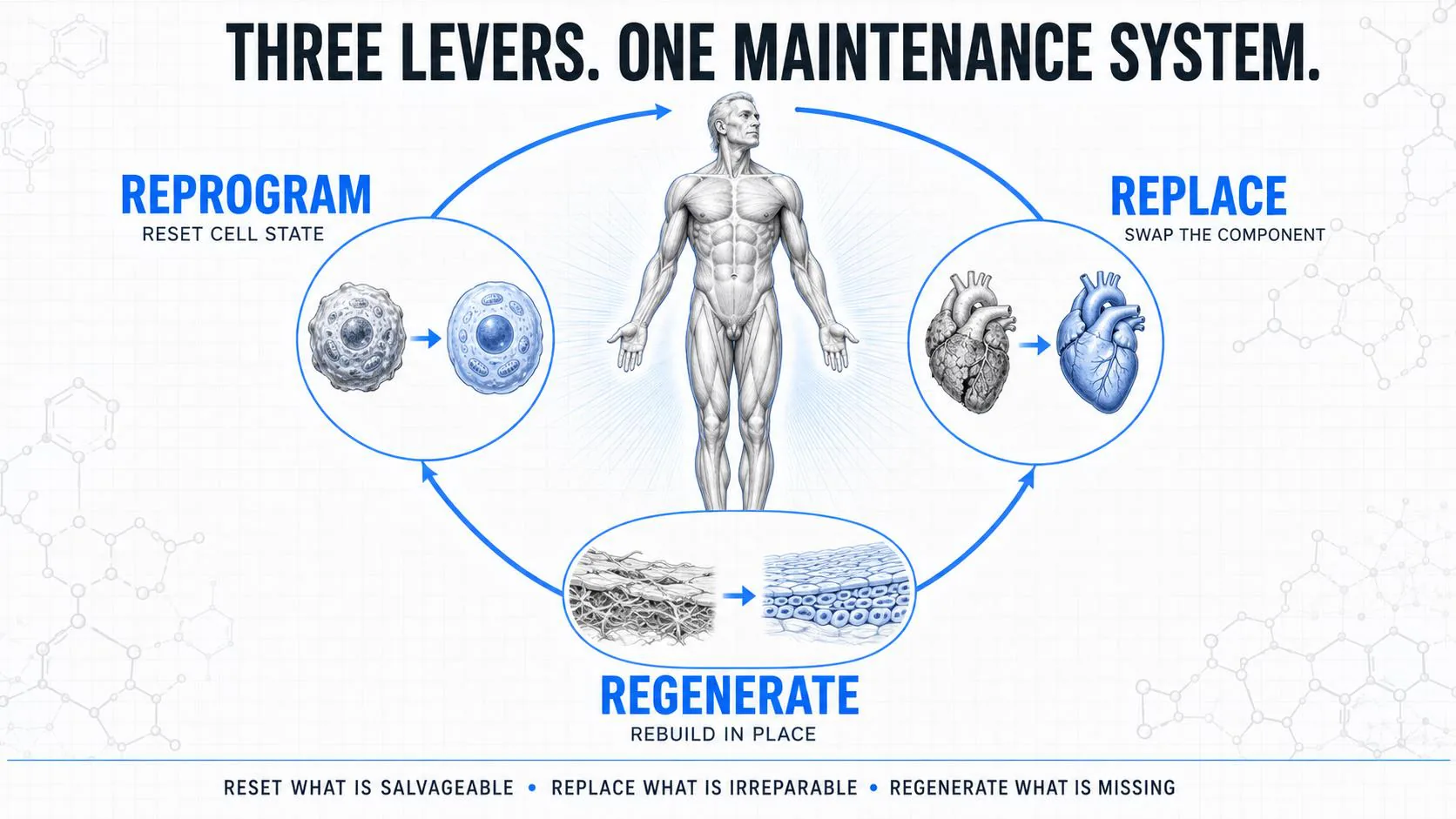
Reprogram. Regenerate. Replace.
the three levers that can dramatically move the needle on human lifespan
Three levers. One maintenance system.
See the slide
04 Lever one · Reprogram
Yamanaka factors reset cell identity.
Four transcription factors reopen the pluripotency program.
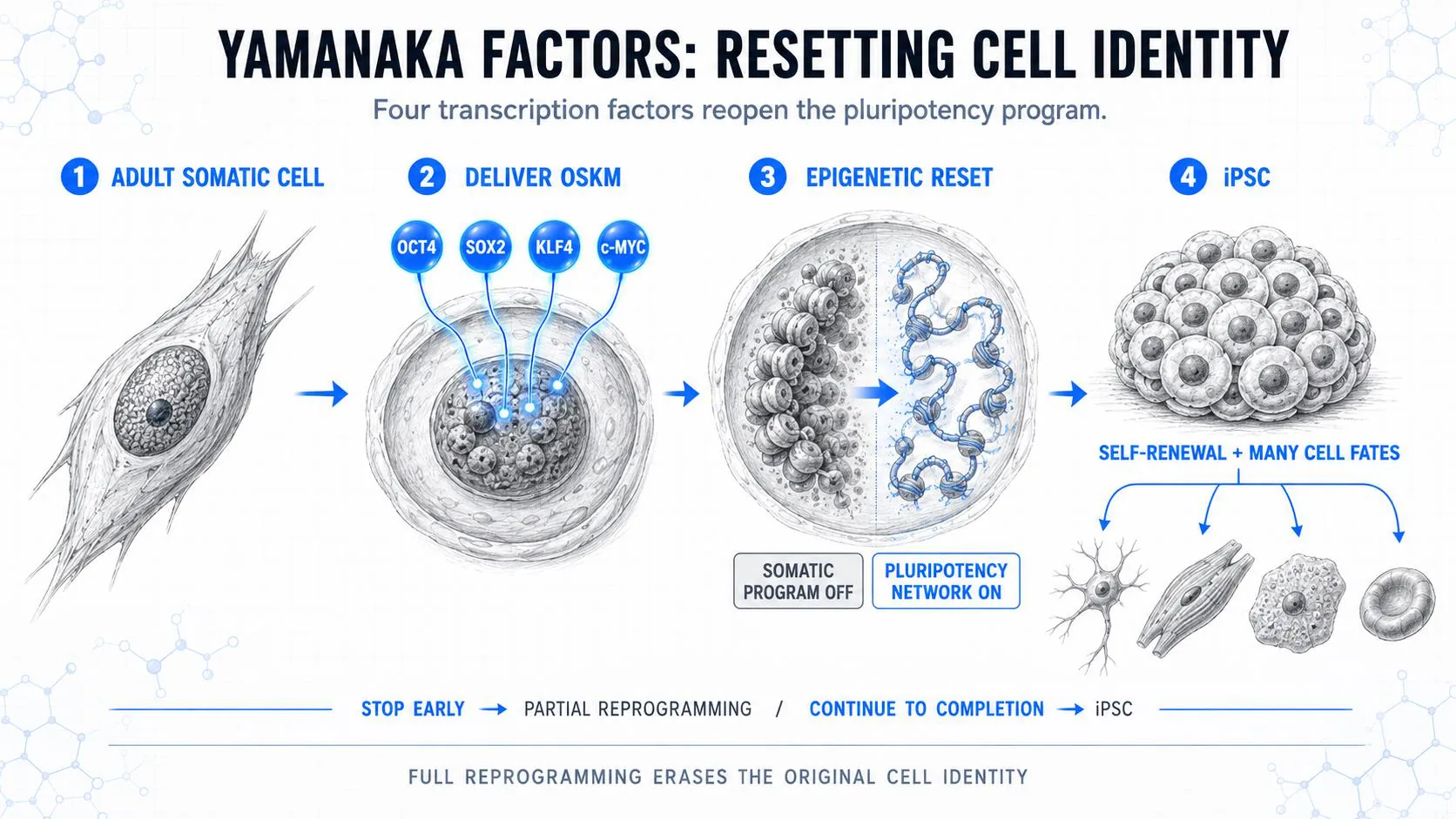
- 1 Adult somatic cell A differentiated cell with its identity set.
- 2 Deliver OSKM OCT4SOX2KLF4c-MYC
- 3 Epigenetic reset Somatic program off. Pluripotency network on.
- 4 iPSC Self-renewal + many cell fates
Partial vs. full reprogramming
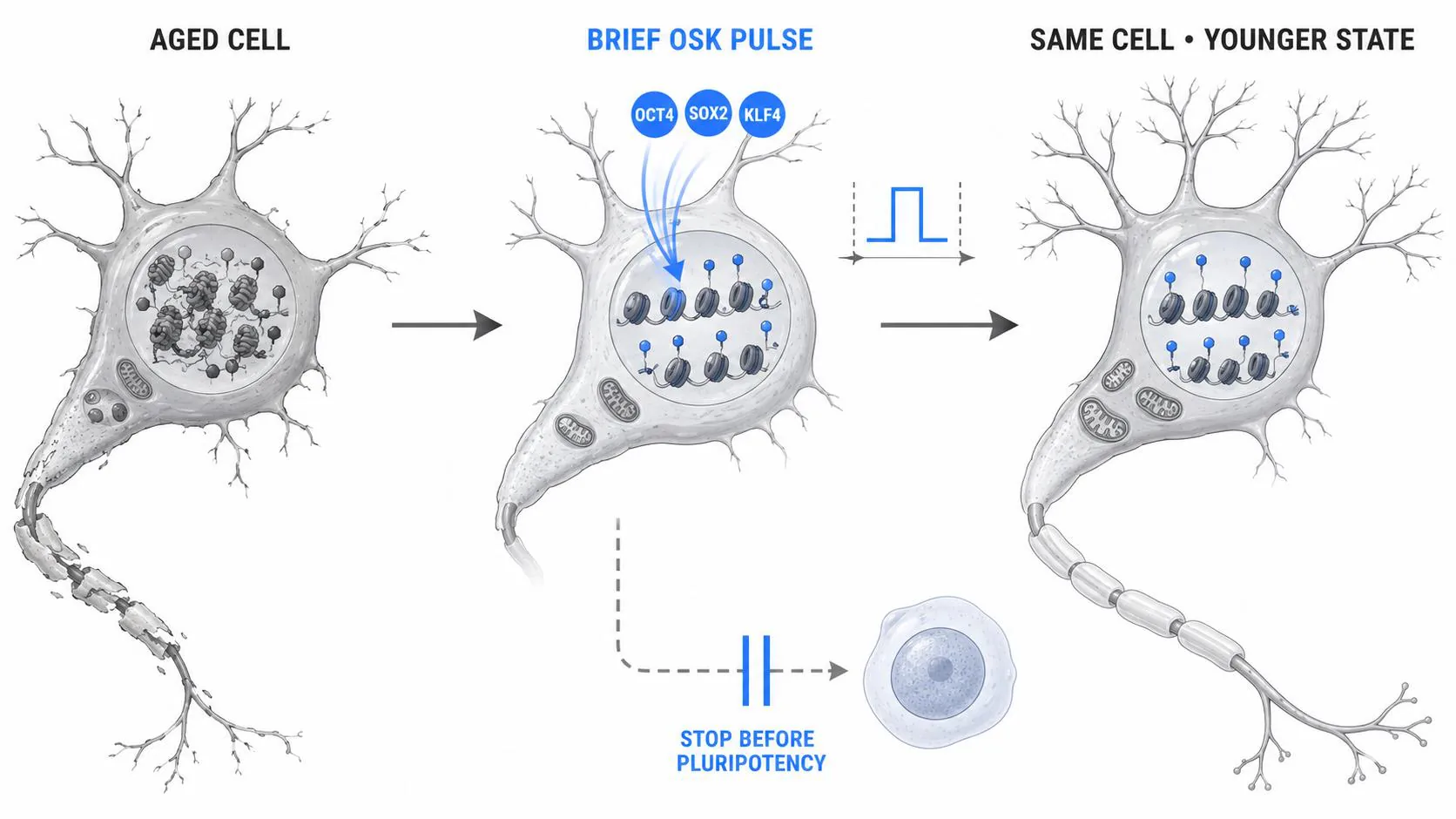
The same four factors. Two very different stopping points.
- Partial reprogrammingA brief OSK pulse (OCT4 · SOX2 · KLF4), stopped before pluripotency. Same cell, younger state.
- Full reprogrammingContinue to completion and the cell becomes an iPSC: self-renewal and many cell fates. Full reprogramming erases the original cell identity.
Status: the deck presents the mechanism and the partial-versus-full distinction. It does not state a development stage for partial reprogramming in people, so none is claimed here.
05 Lever two · Regenerate
Biology already knows how to rebuild.
Shared genes. Different control.
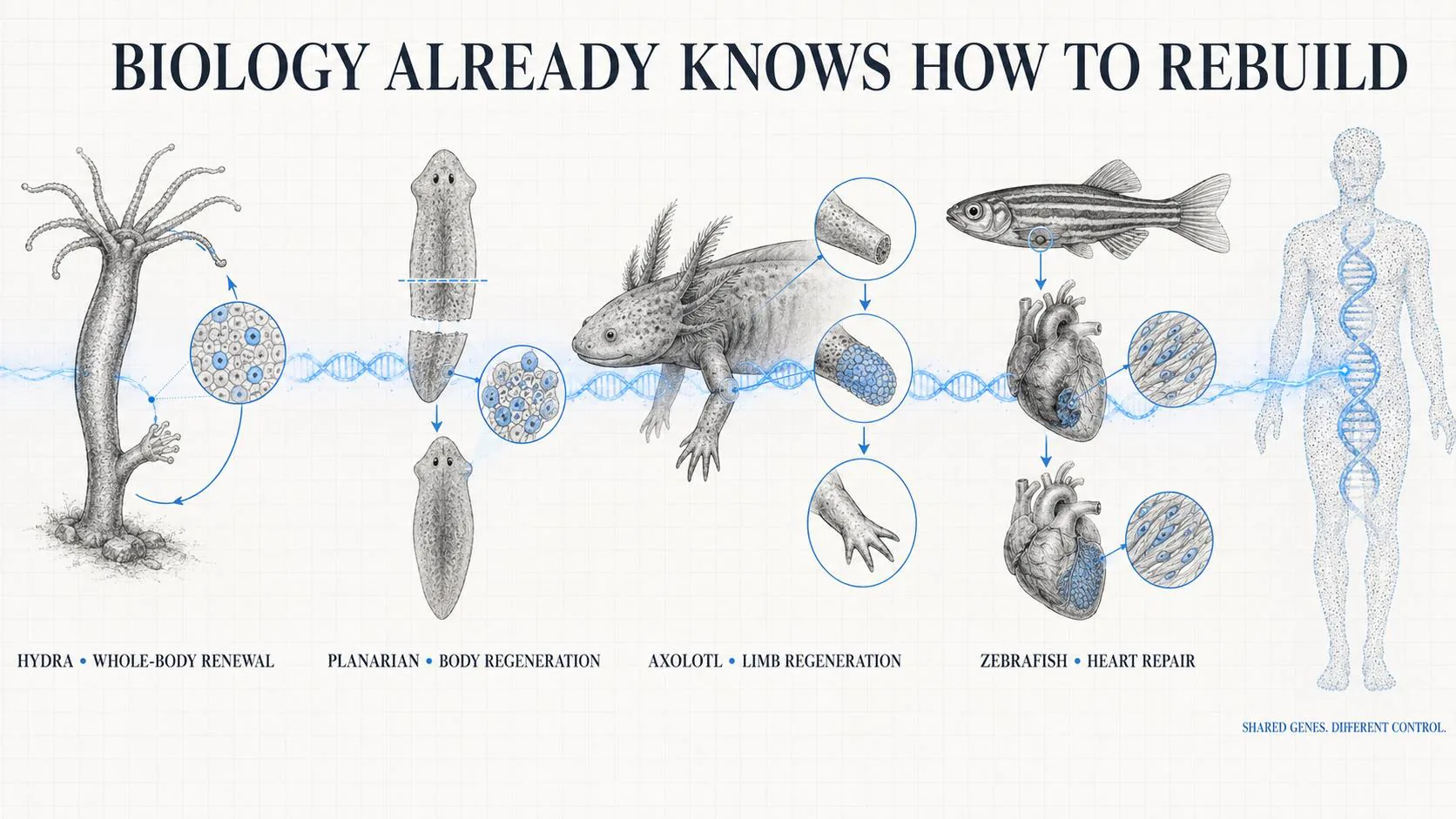
- HydraWhole-body renewal
- PlanarianBody regeneration
- AxolotlLimb regeneration
- ZebrafishHeart repair
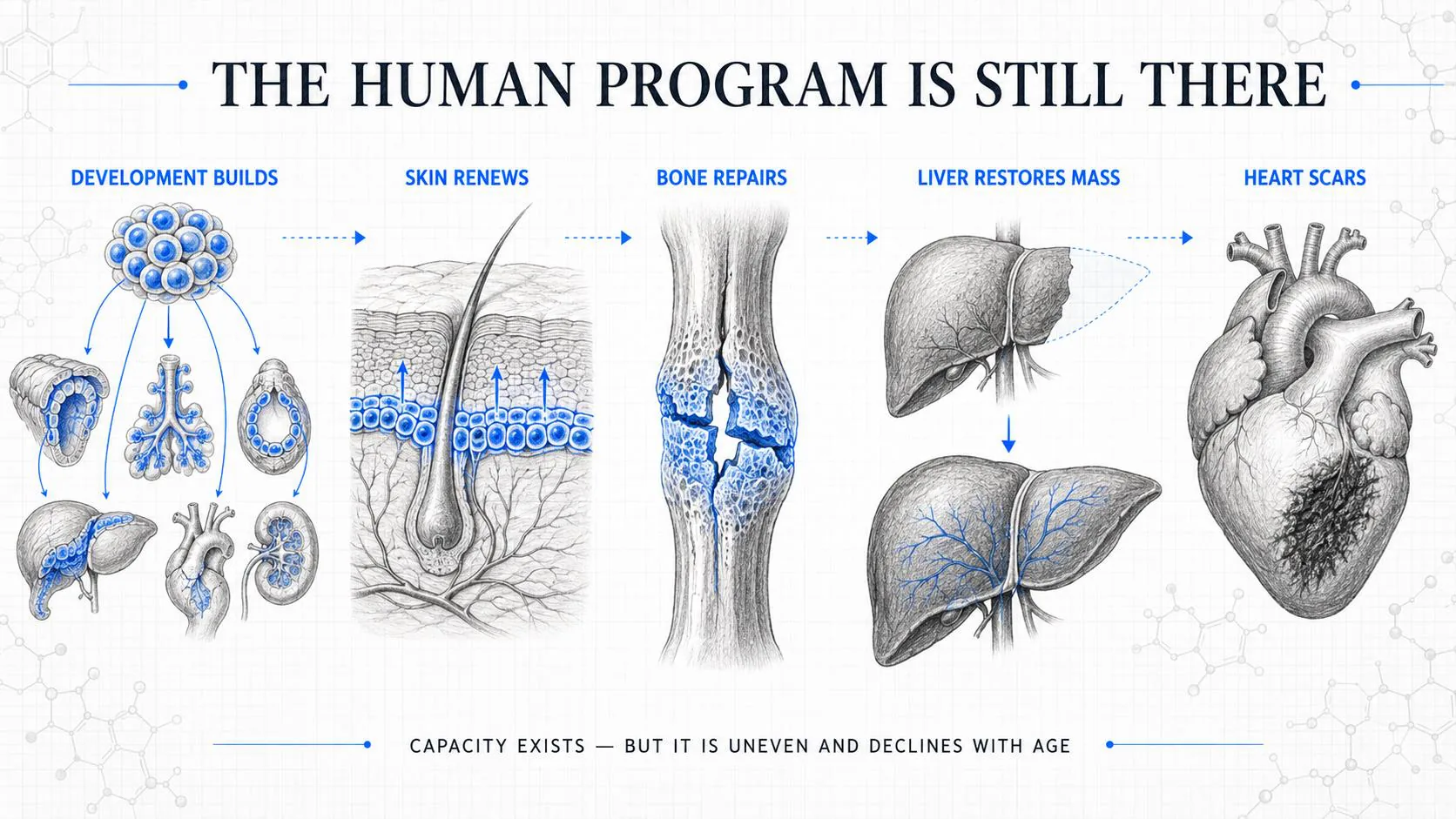
The human program is still there
Capacity exists, but it is uneven and declines with age.
- Development builds
- Skin renews
- Bone repairs
- Liver restores mass
- Heart scars
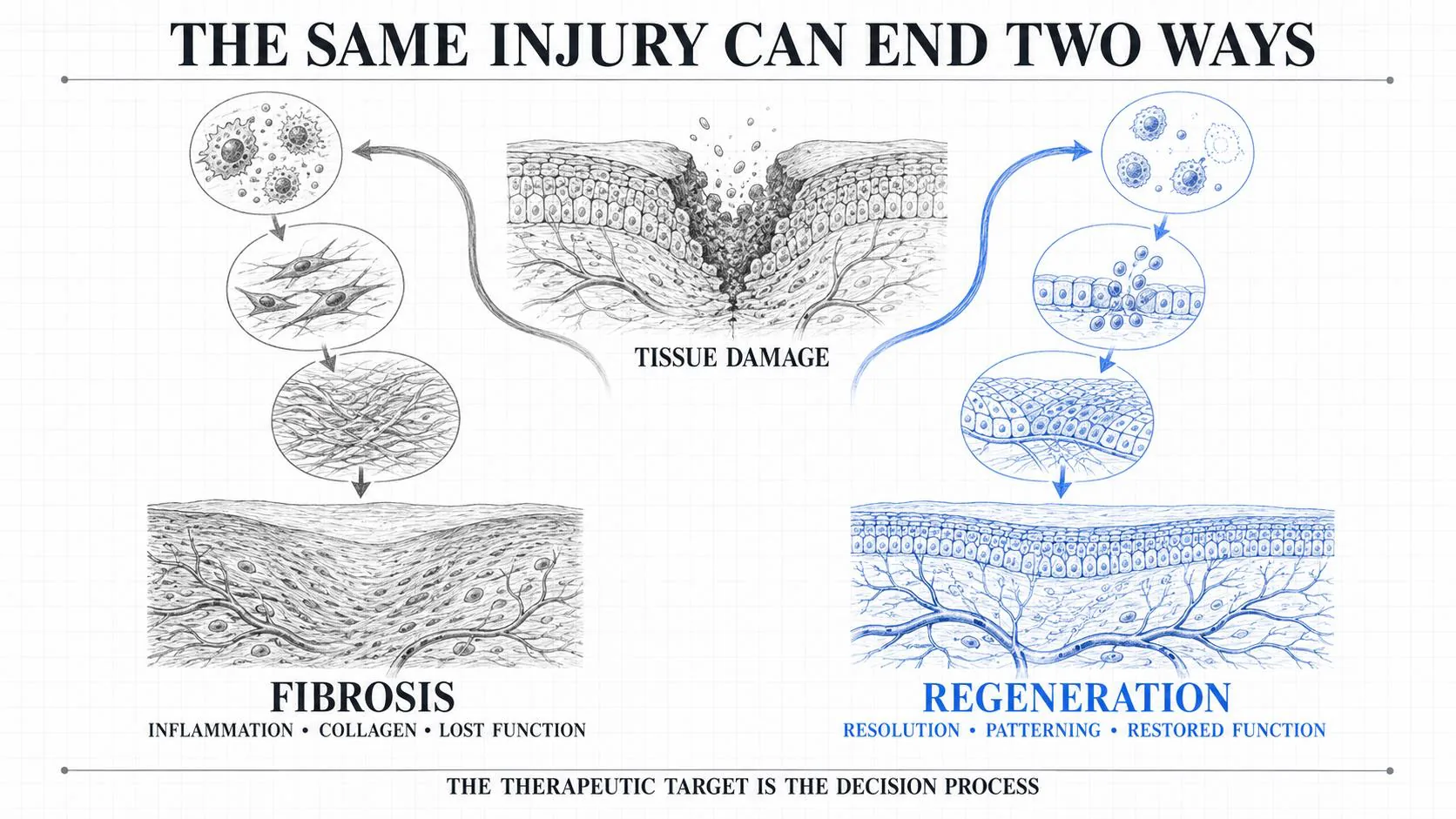
The same injury can end two ways
Tissue damage, then a decision.
Fibrosis
- Inflammation
- Collagen
- Lost function
Regeneration
- Resolution
- Patterning
- Restored function
The therapeutic target is the decision process.
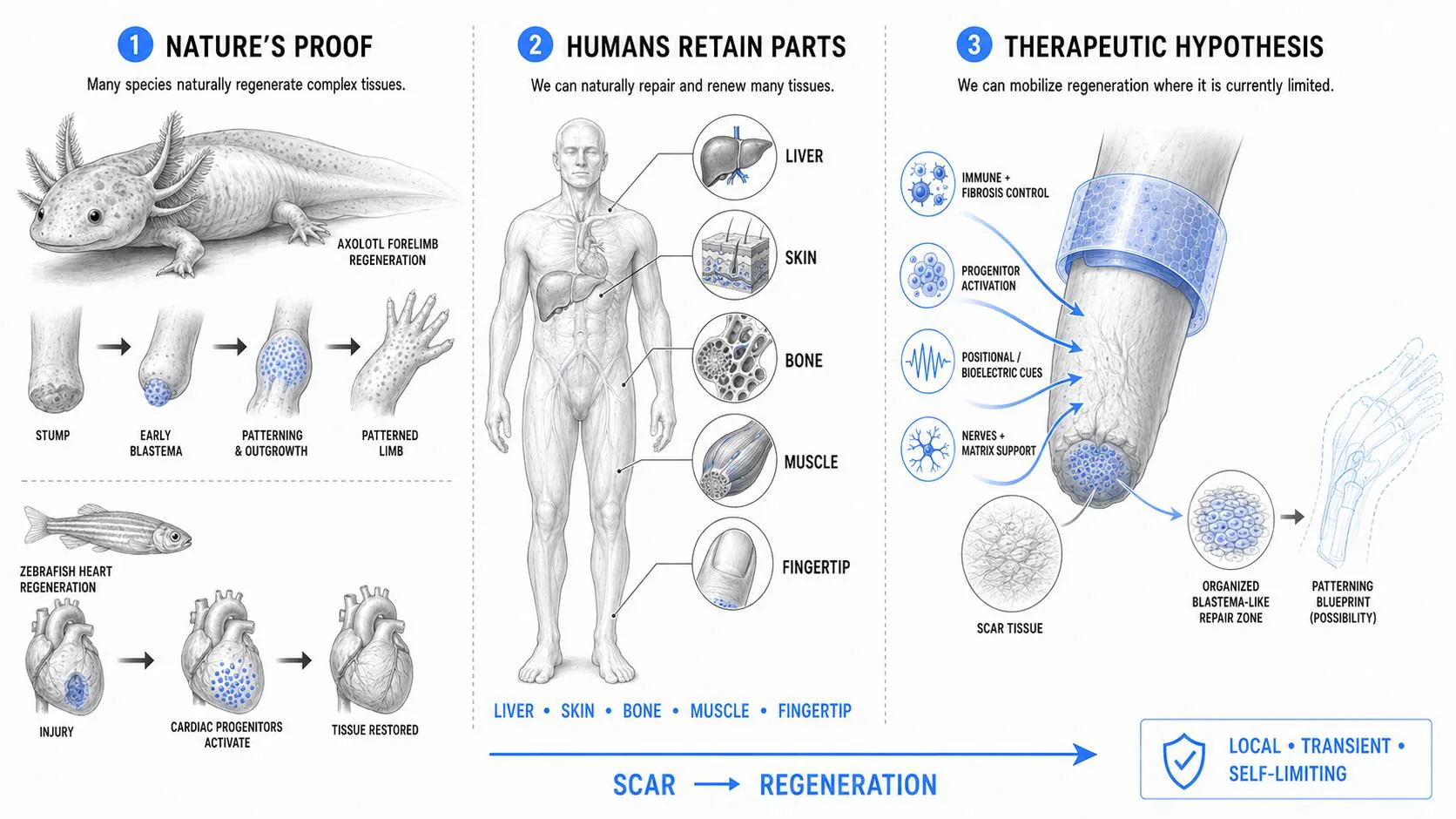
1 Nature’s proof
Many species naturally regenerate complex tissues.
Axolotl forelimbStump → Early blastema → Patterning & outgrowth → Patterned limb
Zebrafish heartInjury → Cardiac progenitors activate → Tissue restored
Observed in other species
2 Humans retain parts
We can naturally repair and renew many tissues.
- Liver
- Skin
- Bone
- Muscle
- Fingertip
Observed in humans
3 Therapeutic hypothesis
We can mobilize regeneration where it is currently limited.
- Immune + fibrosis control
- Progenitor activation
- Positional / bioelectric cues
- Nerves + matrix support
Scar→Regeneration
Local · Transient · Self-limiting
Hypothesis, not a demonstrated therapy
06 Lever three · Replace
Grow a young part. Swap it in.
When repair is insufficient, replace the failing biological component. From cell engineering to functional replacement.
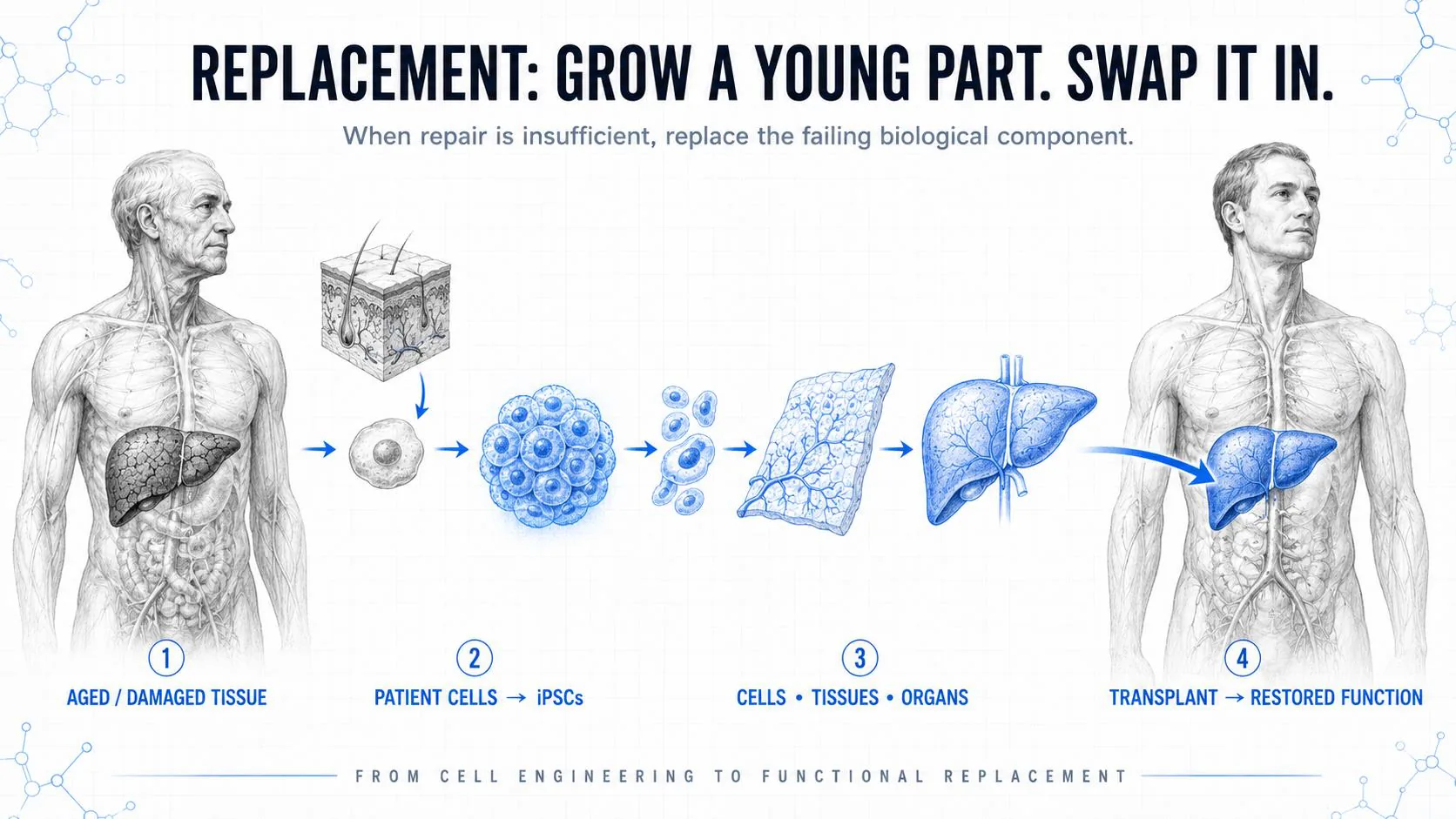
- 1Aged / damaged tissue
- 2Patient cells → iPSCs
- 3Cells · tissues · organs
- 4Transplant → restored function
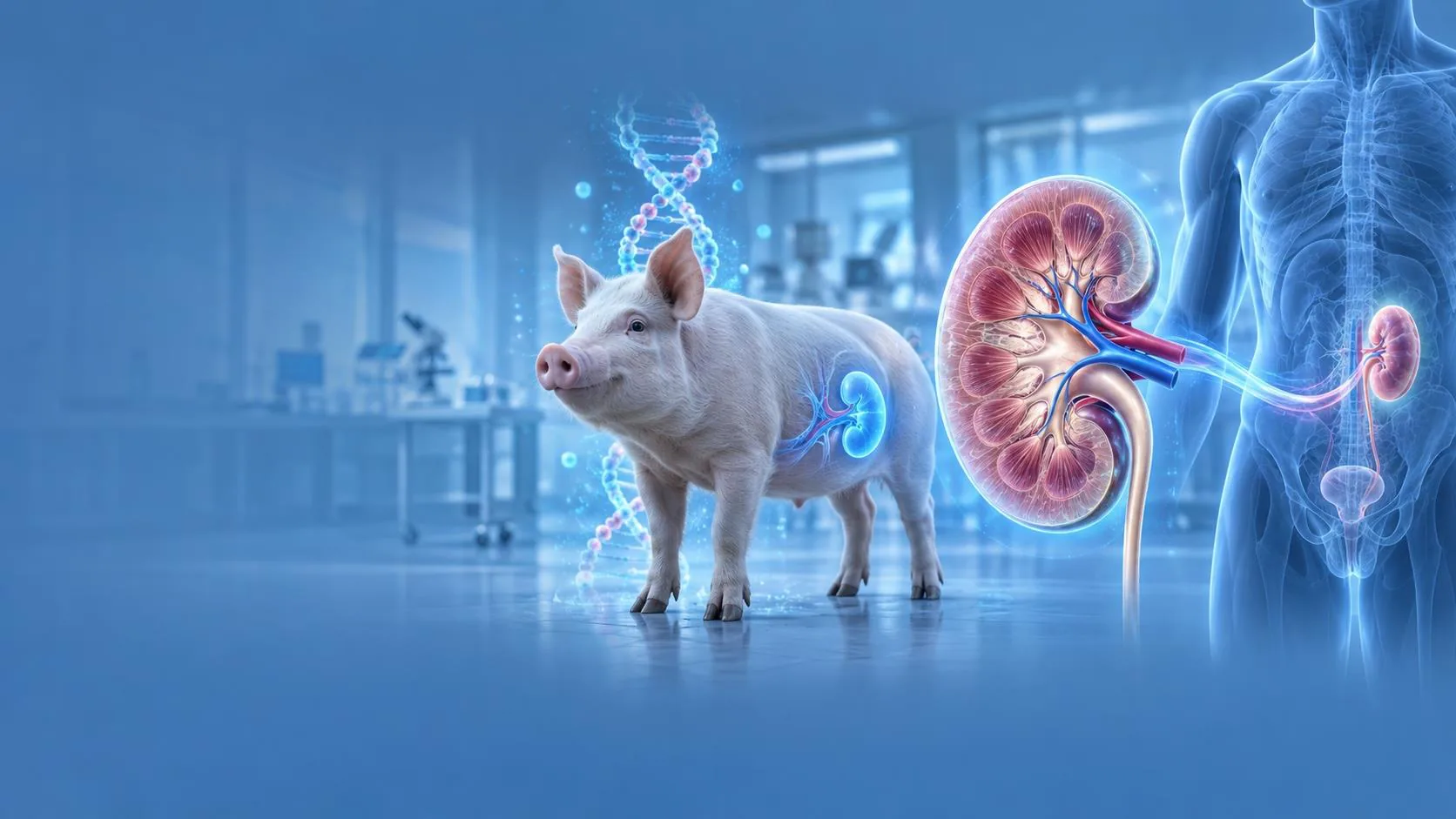
Replacement · Xenotransplantation Early clinical use
Pig organs engineered for human recipients.
69 edits in the eGenesis kidney platform.
- 0 Pig antigen genes disabled Reduce antibody recognition.
- 0 Human genes added Improve immune and blood compatibility.
- 0 Viral copies inactivated Reduce risk from endogenous pig retroviruses.
Human kidney transplants have begun.
Immunosuppression and long-term safety monitoring remain necessary.
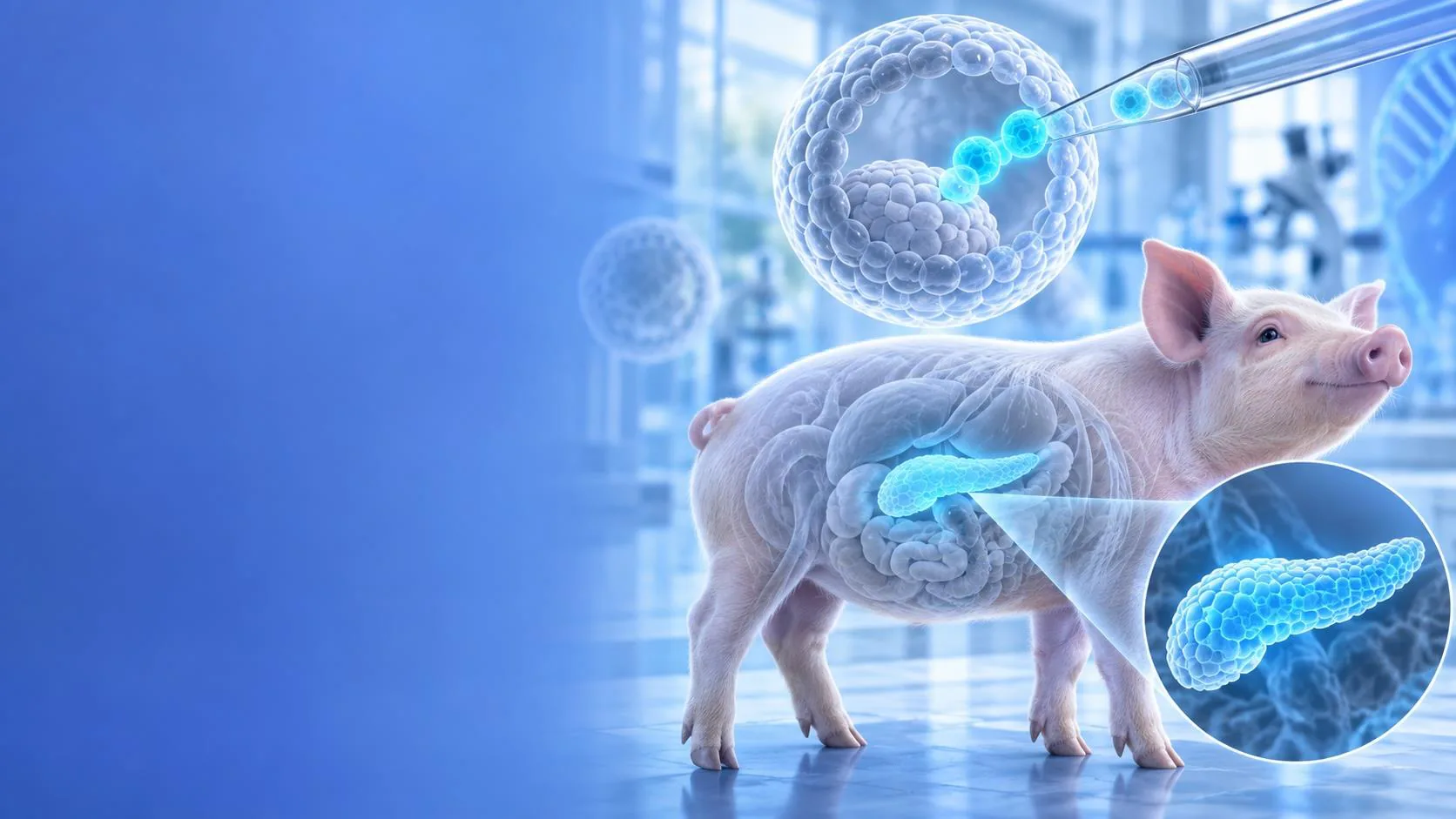
Replacement · Stanford / Nakauchi lab Preclinical
Human tissue grown inside an animal host.
Blastocyst complementation, in three moves.
- 1Create an empty organ nicheDisable the host’s ability to make a specific organ or cell type.
- 2Add human stem cellsDonor cells could fill the vacancy as the host develops.
- 3Recover replacement tissueGoal: patient-matched tissue grown within an animal.
Proof in rodents. Human organs remain a goal.
2026 advance: protecting donor cells from early immune clearance.
Replacement · Renewal Bio Preclinical R&D
Development as a bioreactor.
Patient iPSCs → controlled self-organization → embryo model → organ progenitors (blood, liver, pancreas, neural tissue) → future replacement therapies. Preclinical R&D. Not a reproductive program. Scientific foundation: Prof. Jacob Hanna, Weizmann Institute.
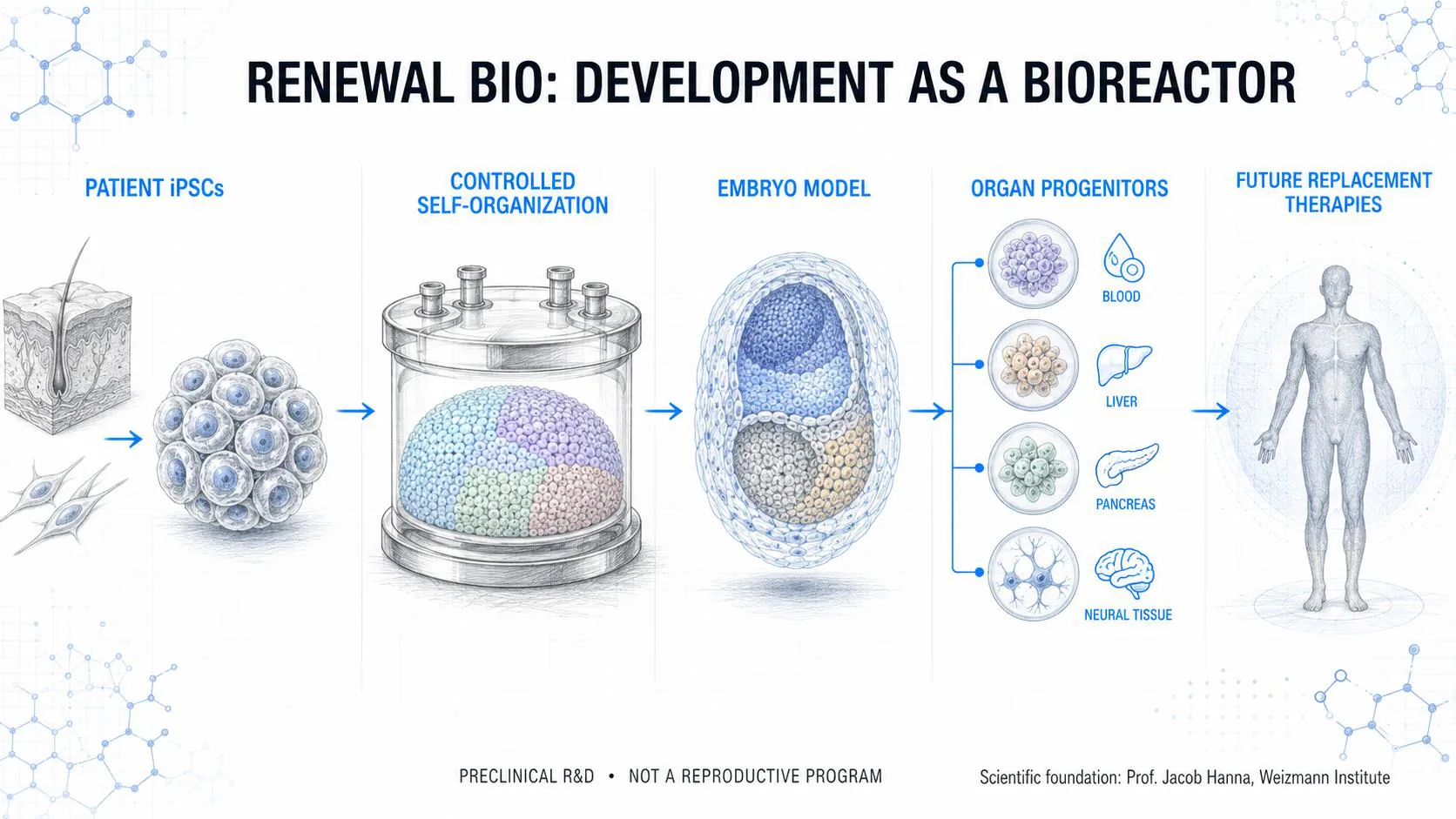
- 01Patient iPSCs
- 02Controlled self-organization
- 03Embryo model
- 04Organ progenitorsBloodLiverPancreasNeural tissue
- 05Future replacement therapies
In the record
- CellCeci n’est pas un embryon de sourisVol. 185 No. 18 · September 1, 2022
- NatureEmbryo models: stem cells form structures that mimic two-week-old human embryos19 October 2023
- CNNA synthetic embryo, made without sperm or egg, could lead to infertility treatments
- NBC NewsScientists use stem cells to create synthetic mouse embryos
- CNN HealthScientists report creation of first human synthetic model embryosJune 15, 2023
- The New York TimesScientists Debut Lab Models of Human Embryos
- ABC Science‘Synthetic human embryos’ were created using stem cells. What are they, and why were they made?June 20, 2023
Covers and headlines as shown in the deck. The embryo-model work is from the Hanna lab; the stembroid data in the deck is marked confidential and is not reproduced here.
07 Why now
The breakthrough is convergence.
Every technology takes us a step closer. But we need to remain focused on the larger goals.
No single technology is enough.
Hover an input or an output.
08 NFX Bio
Who’s building it.
Keep going
Longevity is a society-scale problem.
Living longer and healthier lives will have dramatic impacts on the economy beyond just biotech.
Read the results →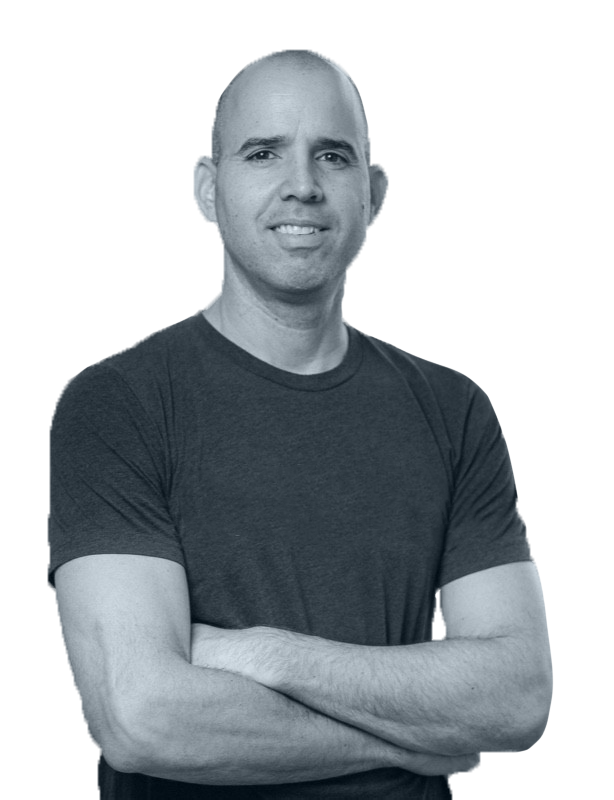
The talk
Omri Amirav-Drory, PhD
General Partner at NFX, where he leads NFX Bio. This site follows his talk. Where we added a sentence of our own, it’s plain-language framing, not new science.
Omri on nfx.com ↗